Startups need to get to a testable product quickly without locking themselves out of future development. These platforms are shortlisted for that balance.
3 platforms compared·Updated September 2026
Affiliate disclosure — Some links on this website are affiliate links. If you click a link and purchase a product or sign up for a service, we may receive a commission at no additional cost to you. Our rankings and editorial opinions are formed independently of affiliate compensation. Read the full disclosure.
The short answer
For most startups, Base44 is the best AI app builder because its free tier is generous enough to validate an idea, authentication and a database are wired in from the first prompt, and paid plans start at $16 a month billed annually. Lovable is the better choice when the product is customer-facing and design quality is part of the pitch, and Bolt.new is the better choice when a technical founder wants to keep editing the generated code directly in the browser.
Key takeaways
Start on a free tier. Base44 and Bolt.new both let you reach a working prototype without a card, which matters more than a few feature checkboxes at pre-seed stage.
Code ownership is the single decision you cannot reverse cheaply. Base44, Lovable and Bolt.new all give you the code; Higgsfield does not, because it is a content platform rather than an app builder.
Budget for credits, not seats. Every builder here meters AI usage, so a month of heavy iteration costs far more than the sticker price suggests.
Auth, database and hosting bundled into the builder save a startup weeks. Base44 and Lovable both ship them; wiring them yourself is where solo founders lose momentum.
The winner changes with your stage: prototype fast on the free tiers, then pay for the one platform your actual product needs rather than keeping three subscriptions alive.
Our top picks
Best overall for startups
Base44
The free plan covers a real validation sprint, accounts and a database exist from the first build, and $16 a month billed annually is the cheapest credible upgrade in this set.
Generated interfaces are the closest to launch-ready of anything we tested, which matters when the app itself is the sales pitch to users or investors.
A free tier with 1M tokens a month, everything running in the browser, and direct code editing during prototyping — Pro is $25 a month when you outgrow it.
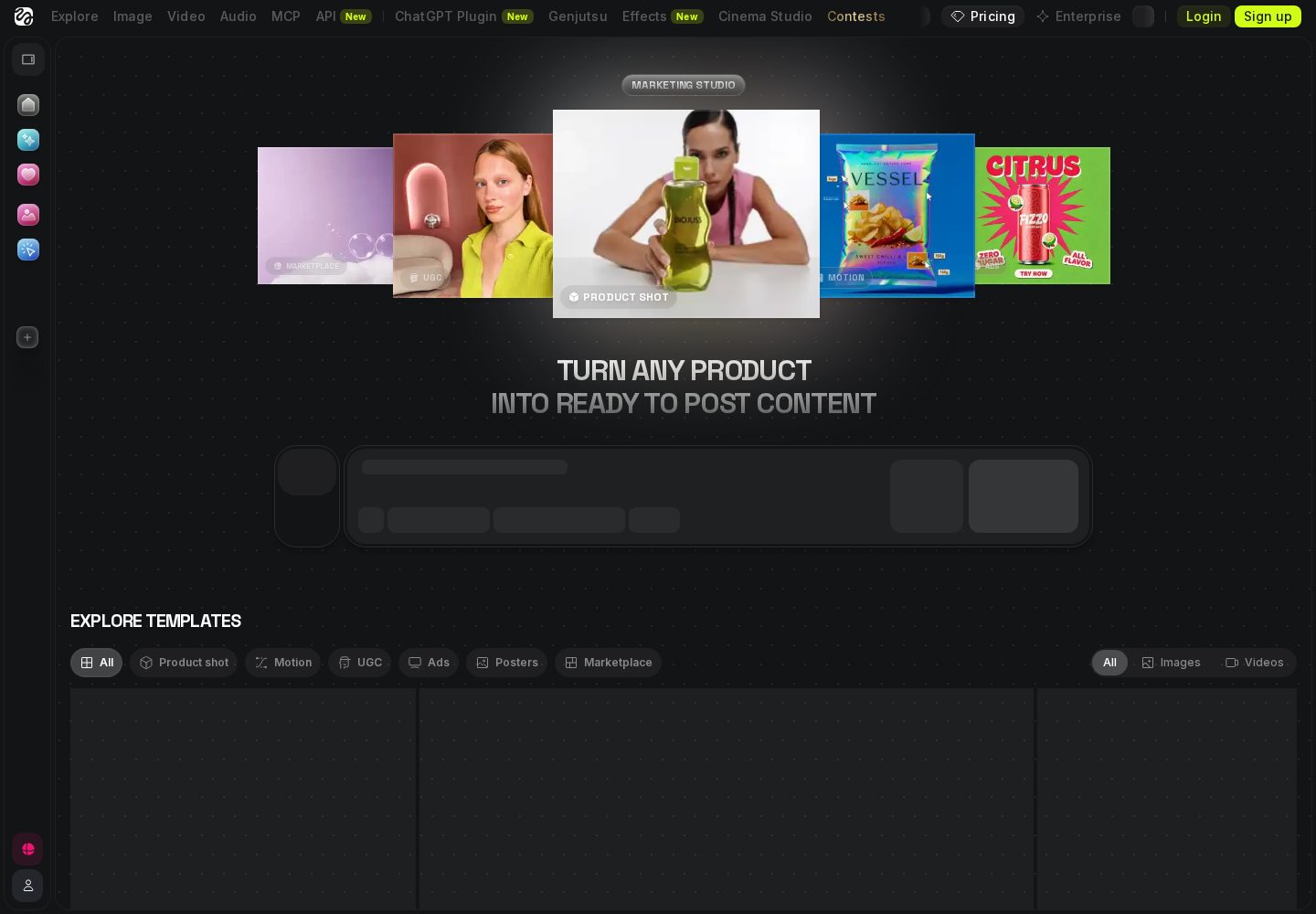
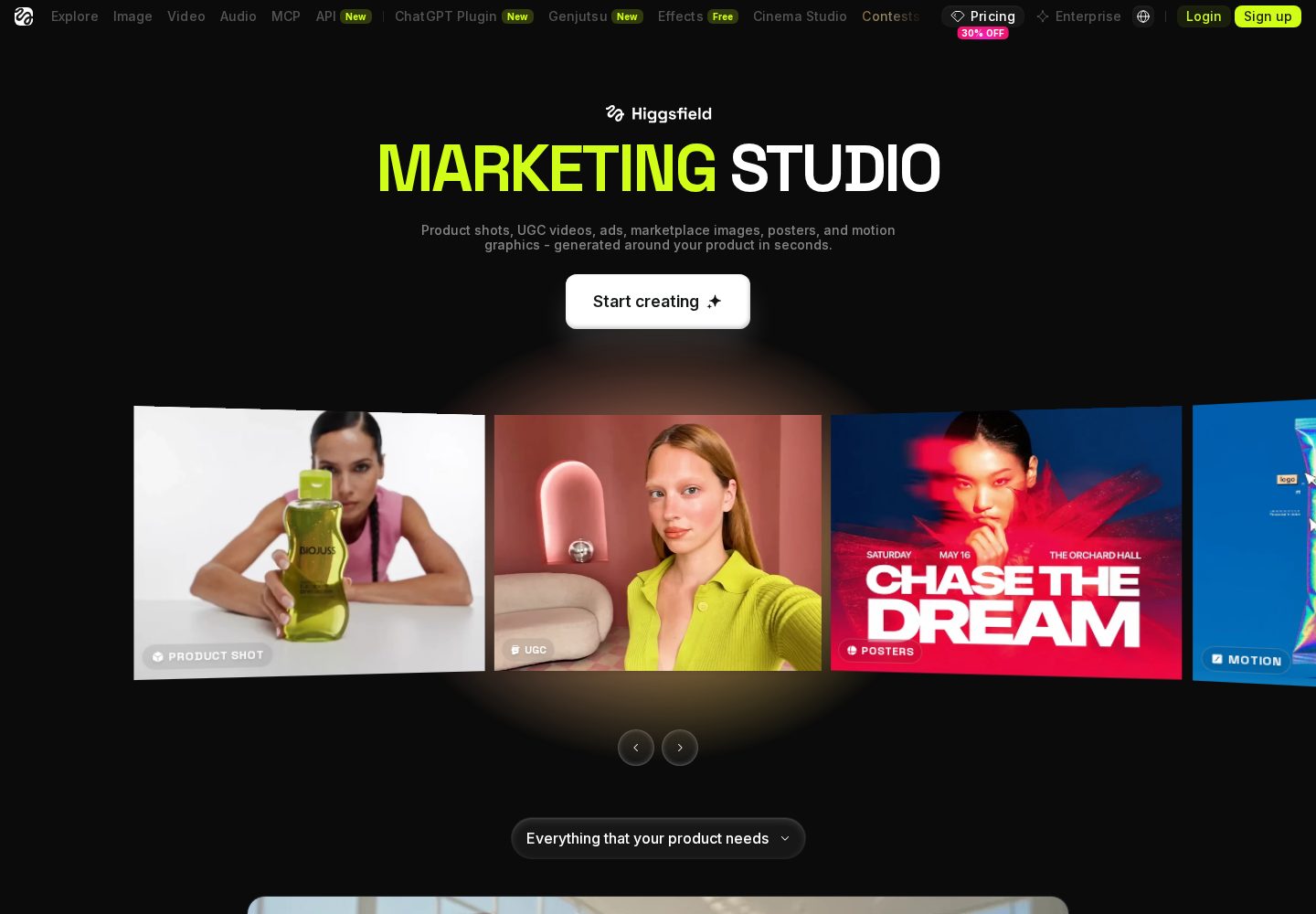
Multi-model AI platform for generating cinematic video and images from a prompt.
Creators and marketers who need cinematic AI video and images, not codeFree plan: Yes
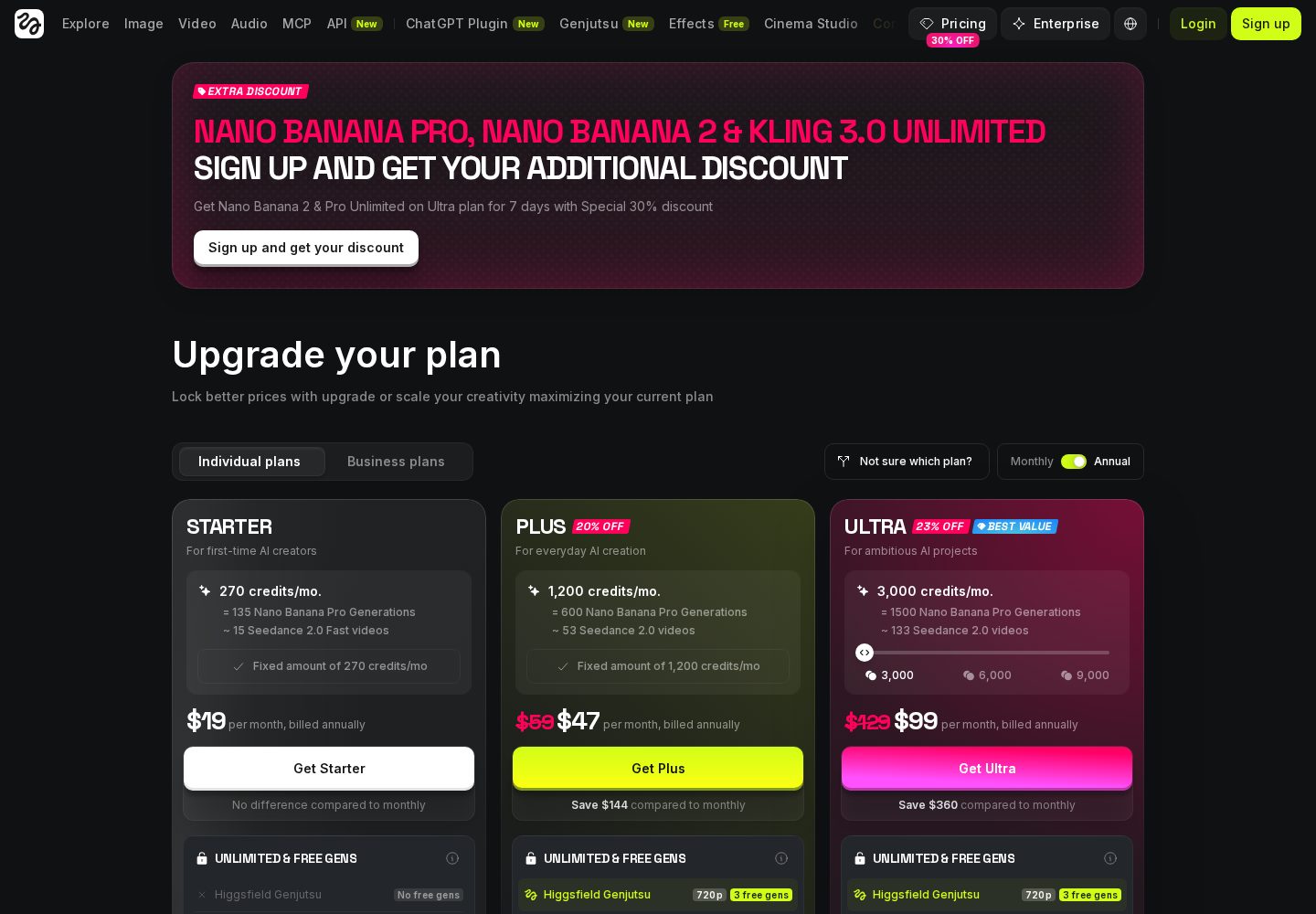
Pricing: Free plan with limited credits; Starter $19/month (270 credits); Plus $47/month (1,200 credits); Ultra $99/month (3,000 credits); Team plans available
We scored these platforms for startup use by weighting time-to-first-working-version, whether authentication and a database exist without external setup, what the first real bill looks like after a month of iteration, and whether the code can leave the platform. Each builder was given the same brief — a two-sided marketplace with sign-up, a listings table, and an owner dashboard — and we recorded where each one stalled. Pricing was re-checked against every vendor's public pricing page in September 2026.
Time to a demo you can show
At pre-seed the only deliverable that matters is something a customer or investor can click. Every platform here reaches a clickable app in an afternoon, but the ones with built-in auth get you to a *believable* app faster because sign-up is not a stub.
Code ownership and exit path
If the company works, a developer will eventually take over the codebase. Builders that sync to GitHub let that handover happen without a rewrite. Builders that keep the code hostage force one at exactly the moment you can least afford it.
The real monthly cost
Sticker prices in this category are close together; credit consumption is not. A month of aggressive prompting can quietly cost more than the subscription, so check what happens when credits run out mid-sprint.
Backend depth
A startup app is rarely just screens. Ask whether the builder gives you a database, file storage, roles and permissions, and third-party integrations, or whether you are expected to bolt those on yourself.
Platform breakdown
1
Base44
Best for: Non-technical teams building full-stack business apps quickly
9.9/10
Rated 9.9/10 and our top pick for non-technical builders. Base44 combines one of the quickest prompt-to-app workflows with a database, authentication, analytics and hosting that work without separate setup. It loses points for its two-part credit system and for the testing still required before a generated app is ready for important production data.
Key strengths
✓Produces a working front end, database and user accounts from one prompt
✓Free plan includes the core builder, hosting, authentication and analytics
✓Paid plans include unlimited apps and direct in-app code editing
✓Builder and higher plans add two-way GitHub sync and AI model selection
✓Custom domains and production hosting are handled inside the platform
Key weaknesses
−Separate message and integration credits make real usage harder to predict
−Complex permissions, workflows and edge cases still need careful testing
−GitHub sync is restricted to Builder and higher plans
−Repeated prompting can introduce visual or functional regressions
Pricing:
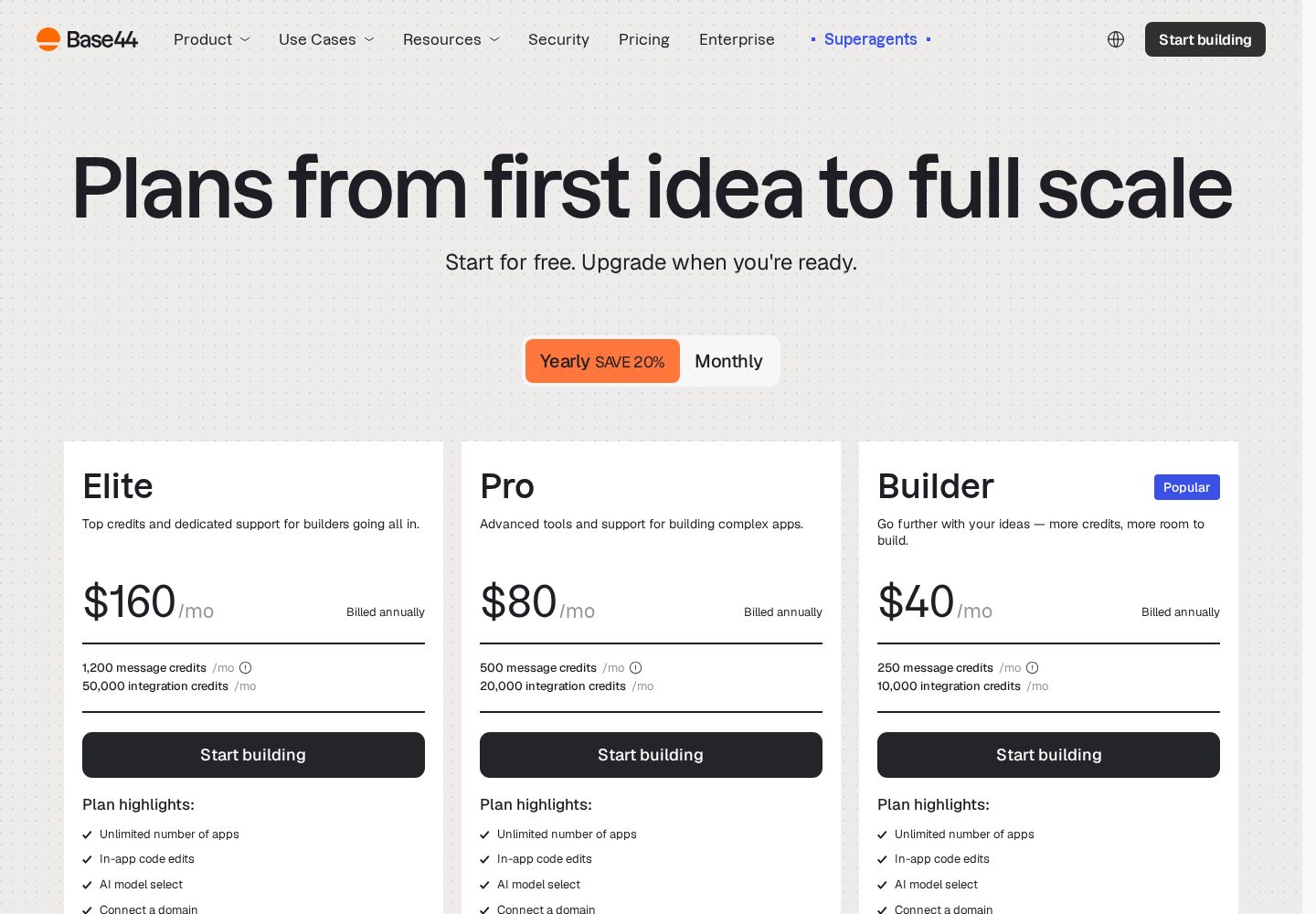
Free; paid plans from $16–$160/month billed annually, with separate message and integration credit limits
Ideal user:
Operations, HR and finance teams building internal tools, and non-technical founders who want screens plus data working quickly without touching infrastructure.
Best for: Non-technical founders shipping a full-stack web app or SaaS MVP
9.8/10
Our runner-up. Lovable covers the whole path from a written idea to a hosted, working app exceptionally well, and because projects sync to your own GitHub repository you are not trapped if you outgrow it. Budget for credits if you iterate a lot.
Key strengths
✓Describe the app in plain English and get a working front end and back end
✓Built-in database, authentication and hosting — no separate setup
✓Two-way GitHub sync, so the code stays yours
✓Live preview makes each change visible immediately
✓Free plan is generous enough to judge the tool before paying
Key weaknesses
−Credit-based usage gets expensive on heavy iteration
−Unusual business logic and security work still need developer review
−Large existing codebases are not its strong point
Pricing:
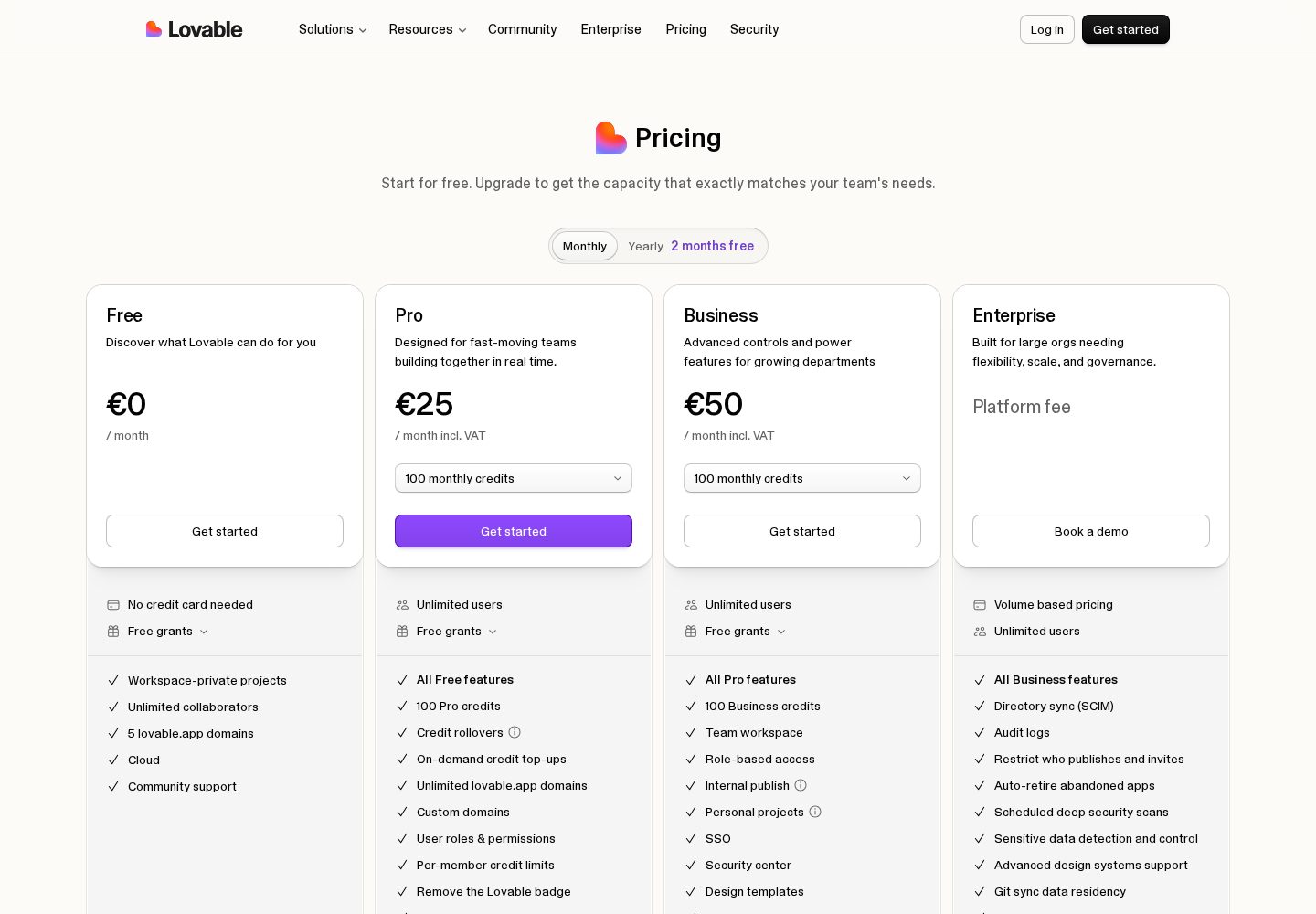
Free plan with limited daily credits; Pro from $25/month, Business $50/month
Ideal user:
Founders, product managers and designers who can describe what they want clearly and need a real, hosted product rather than a prototype — especially anyone building a SaaS MVP or internal tool solo.
Best for: Creators and marketers who need cinematic AI video and images, not code
9.5/10
The right pick when the thing you are building is content, not software. Higgsfield bundles many of the best AI video and image models behind one prompt box with genuinely cinematic camera control — just go in knowing credits expire and heavy video use pushes you up the tiers quickly.
Key strengths
✓One subscription unlocks many leading video and image models instead of separate accounts
✓Cinematic camera controls produce genuinely film-like motion from a text prompt
✓Free plan lets you test the workflow before paying
✓Web, Canvas, CLI and MCP workflows fit both casual creators and production pipelines
Key weaknesses
−Not an app builder — it generates video and images, not applications
−Credits do not roll over and premium video burns through them quickly
Pricing:
Free plan with limited credits; Starter $19/month (270 credits); Plus $47/month (1,200 credits); Ultra $99/month (3,000 credits); Team plans available
Ideal user:
Content creators, marketers and filmmakers who want professional-looking AI video and images from prompts without managing several model subscriptions.
Why startups use AI app builders in the first place
The economics changed in 2024 and have not changed back. A pre-seed team that would once have spent three months and a contractor budget to reach a demo can now reach one in a weekend, and the cost of being wrong drops with it. That is the real argument for AI app builders at seed stage: not that they replace engineers, but that they make it cheap to discover which product is worth hiring engineers for.
The trap is treating the prototype as the company. Founders who prompt their way to a working app and then keep prompting for eighteen months end up with a codebase nobody understands, including the AI that wrote it. The platforms that survive contact with a real customer base are the ones that hand you a normal repository — React, a database, an auth provider — so a developer can join and be productive on day one without an archaeology project.
So the right frame for a startup is staged. Use the free tier to answer 'will anyone use this?'. Pay for one platform to answer 'will anyone pay for this?'. Move to a real engineering workflow when the answer to both is yes. Every recommendation below is made with that sequence in mind rather than assuming you will live inside the builder forever.
Which builder fits which startup stage
At the idea stage, before you have users, the free tiers do the work. Base44's free plan includes message and integration credits, up to five apps, and the built-in authentication, database and analytics — enough to put a genuine sign-up flow in front of ten potential customers. Bolt.new's free tier gives 1M tokens a month in the browser, which suits a technical founder who wants to see and steer the code from the first minute.
At the validation stage, when you have a landing page converting and a waitlist, design starts to matter and Lovable becomes the stronger buy. Its output needs the least cosmetic rework before you put it in front of strangers, and Pro at $25 a month is a reasonable line item once the app is doing a job. Base44's Starter at $16 a month billed annually is the cheaper alternative if your app is more workflow than storefront.
At the traction stage, the question flips from 'which builder' to 'how do we get off the builder gracefully'. Base44 syncs two ways with GitHub on Builder plans and above; Lovable and Bolt.new also hand over the code. That is the point at which a contractor or first engineering hire can take the repository and continue in a normal development workflow, which is exactly why code export sat so heavily in our scoring.
Idea stage: Base44 free or Bolt.new free — validate without spending.
Validation stage: Lovable Pro ($25/mo) for customer-facing polish, or Base44 Starter ($16/mo annually) for internal-shaped products.
Traction stage: whichever platform you are on, turn on GitHub sync and start treating the output as a real codebase.
What these platforms actually cost a startup
Subscription prices in this category cluster tightly. Base44 runs from free to $160 a month billed annually across five tiers; Lovable's Pro is $25 a month with Business at $50; Bolt.new is free for 1M tokens a month with Pro at $25. On paper, a founder can run any of them for the price of a couple of SaaS tools. In practice the meter is what bites.
Base44 is the clearest example of why you should read the credit model before the price. It bills two separate pools — message credits for prompting and integration credits for things your app does at runtime — so an app with busy integrations can consume budget even when you are not building. Bolt.new's token model is simpler to reason about but disappears quickly during heavy iteration, since every regeneration re-reads context. Lovable's credit consumption is the most predictable of the three in our testing, which is part of why it scores well for teams shipping continuously.
The practical advice is unglamorous: set a monthly ceiling before you start, and treat a blown credit budget as a signal that you are prompting your way around a problem rather than solving it. The founders who spend the least are the ones who plan a feature in writing, prompt once, then edit — not the ones who re-roll the same screen twenty times hoping for a different result.
Five mistakes we see startups make with AI builders
The first is building the whole product before talking to anyone. These tools are so fast that founders skip the customer conversation entirely and end up with a beautifully generated answer to a question nobody asked. Build the one screen that tests your riskiest assumption, then stop.
The second is ignoring the security model. A generated app with a database will happily ship with permissive access rules unless you check them. Before any real user data goes in, read the access rules yourself, confirm that one account cannot read another's rows, and keep every secret on the server side rather than in the front end. Base44's built-in permissions help here but they still need configuring to your actual data model.
The third is running three subscriptions at once 'to compare', which is how a $25 tool becomes $90 a month. The fourth is never connecting GitHub, leaving the only copy of the business inside a vendor account. The fifth — and the most expensive — is treating regressions as noise: when repeated prompting starts breaking screens that used to work, that is the signal to move to a code-first workflow, not to prompt harder.
Our verdict for startup teams
Base44 takes the top slot for startups because it removes the most startup-specific friction: you can validate free, you get accounts and a database without a second vendor, the cheapest paid tier is $16 a month billed annually, and Builder plans sync your code both ways with GitHub so the exit path exists from day one. The credit model is the thing to watch, not the platform's capability.
Choose Lovable instead when your app is the product people see — a marketplace, a consumer tool, an investor-facing demo — because its output needs the least design rework, and $25 a month buys continuous iteration. Choose Bolt.new if you can read code and want to stay close to it while prototyping; the free tier is genuinely useful and Pro matches Lovable on price.
Whichever you pick, the decision that compounds is not the subscription. It is whether you keep the code somewhere you control and whether you stop prompting when the product is ready for engineers. Do those two things and any of the top three here will get a startup from idea to funded demo without a technical co-founder.
Frequently asked questions
What is the best AI app builder for a startup with no budget?+
Base44's free plan is the strongest no-budget option because it includes message and integration credits, up to five apps, and built-in authentication, database and analytics — so your prototype can have a real sign-up flow. Bolt.new's free tier (1M tokens a month) is the better free option if you are comfortable reading and editing code.
Can an AI app builder handle a real startup product, or only a prototype?+
It can handle a real product up to a point. Base44, Lovable and Bolt.new all produce a standard codebase with a database and authentication, which is enough to serve early customers. The usual limit is not capability but maintainability: once the app is large enough that prompting starts breaking working screens, move the repository into a normal development workflow.
Do I still need a technical co-founder?+
Not to reach a demo or your first paying customers. You do need technical judgement — or someone to review it — before you store customer data, take payments, or launch publicly, because access rules and secret handling are the two areas where generated apps most often ship unsafe defaults.
How much should a startup budget per month for an AI app builder?+
Plan on $16–$50 a month for the subscription and expect credit consumption on top during heavy build weeks. Base44 Starter is $16 a month billed annually, Lovable Pro is $25 and Bolt.new Pro is $25. Set a ceiling before you start; the overspend in this category almost always comes from re-prompting, not from the plan.
Will I be locked into the platform?+
Not with our top three. Base44 supports in-app code editing and two-way GitHub sync on Builder plans and above, and Lovable and Bolt.new also give you the code. Connect GitHub on day one anyway — it costs nothing and it means the business is never stored only in a vendor account.
Our overall score is based on a weighted evaluation of product capabilities, usability, pricing and value, flexibility, and suitability for different types of users. Scores are editorial judgements based on publicly documented product information; where a criterion has not yet been verified for a platform, we mark it as pending rather than estimate it. We do not claim hands-on testing for any platform on this site until that testing has been carried out and published.
Ease of use
20%
How quickly a new user can get to a working result.
AI capabilities
20%
Quality and usefulness of the AI-driven building experience.
Flexibility
15%
Range of app types and structures the platform can produce.
Customisation
10%
How far the generated result can be shaped to a specific need.
Deployment & integrations
10%
Hosting, publishing and connections to other services.
Pricing & value
10%
What you get relative to what the platform costs.
Code ownership & export
8%
Whether you can take the resulting code with you.
Scalability & support
7%
Suitability beyond a prototype, and help when things break.
Additional criteria we consider per category: deployment options, integrations, code ownership and export, scalability, support quality and target audience fit.
Not Sure Which AI App Builder to Choose?
Get our free AI App Builder comparison guide.
No sign-up is required to read any comparison on this site.