Higgsfield vs Lovable: Which AI App Builder Is Better?
A cinematic AI video and image generator compared with a prompt-first app builder.
Affiliate disclosure — Some links on this website are affiliate links. If you click a link and purchase a product or sign up for a service, we may receive a commission at no additional cost to you. Our rankings and editorial opinions are formed independently of affiliate compensation. Read the full disclosure.

Higgsfield
Creators and marketers who need cinematic AI video and images, not code
Multi-model AI platform for generating cinematic video and images from a prompt.

Lovable
Non-technical founders shipping a full-stack web app or SaaS MVP
Prompt-driven builder that turns a written description into a working full-stack web app.
Higgsfield vs Lovable: official product visuals
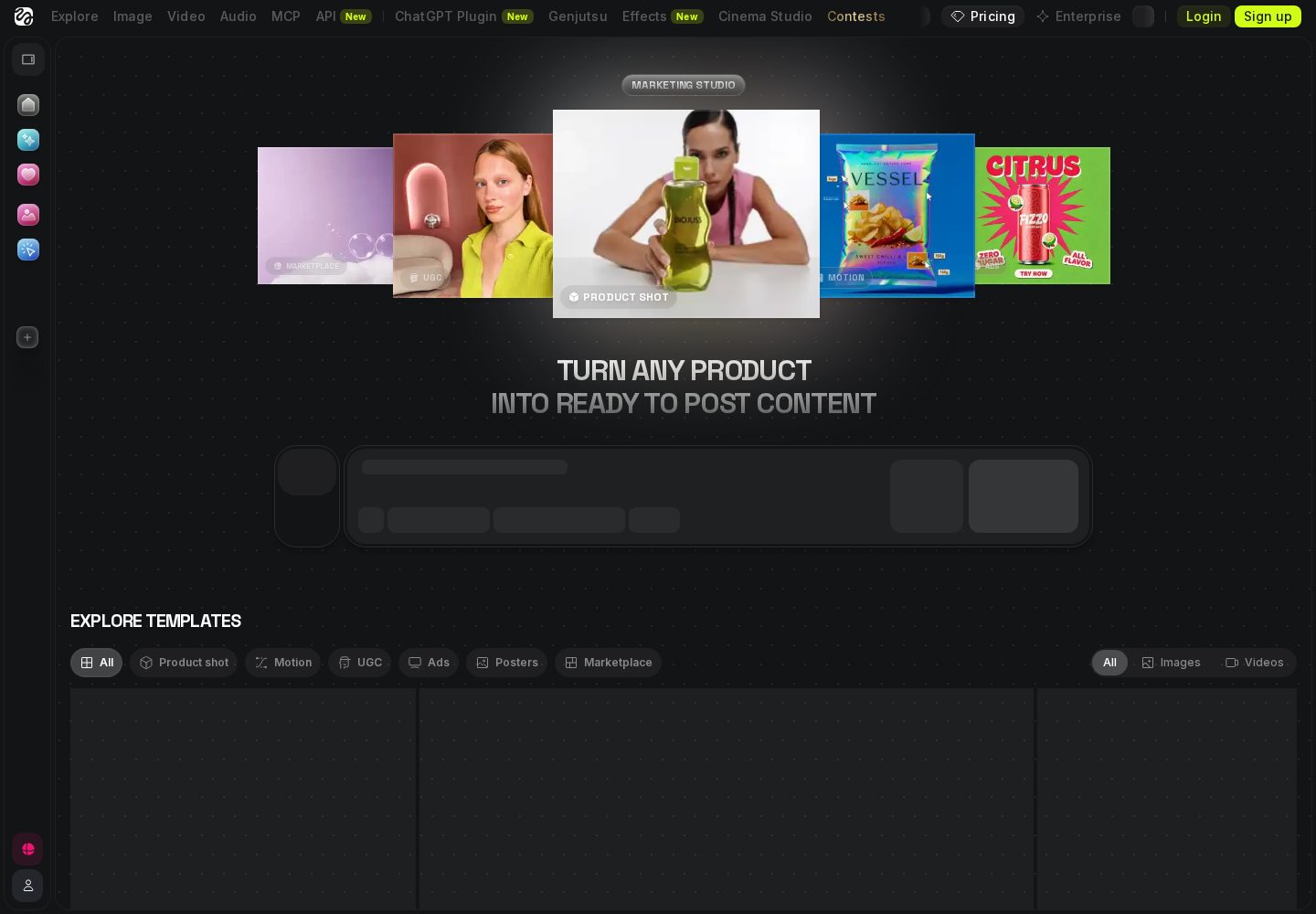
Higgsfield Marketing Studio
Higgsfield's visual workspace is built for generating product imagery, video, and campaign creative rather than software.
View official source: Higgsfield Marketing Studio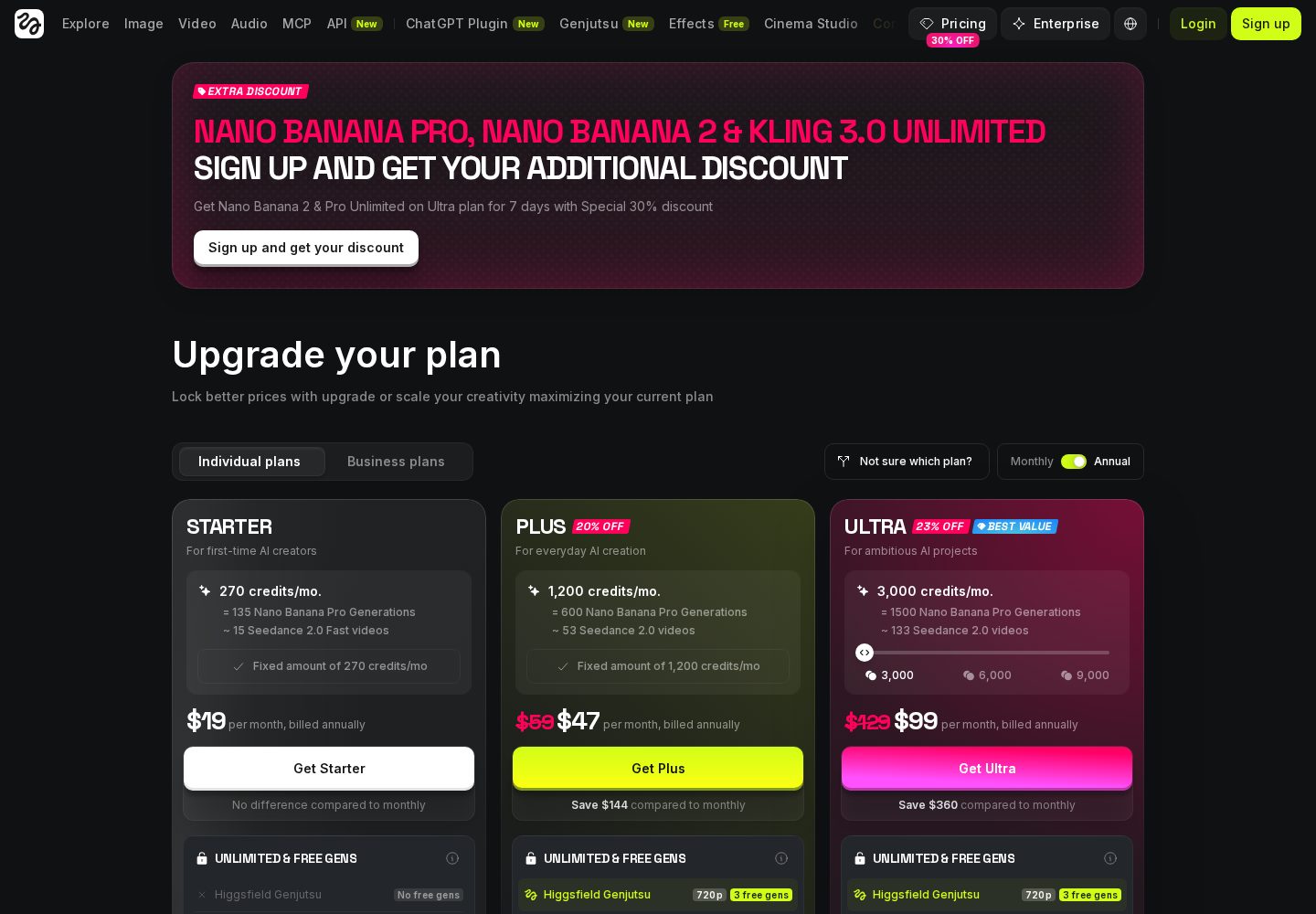
Higgsfield pricing plans
Higgsfield's upgrade page compares monthly credits, model access, and generation limits across paid plans.
View official source: Higgsfield pricing page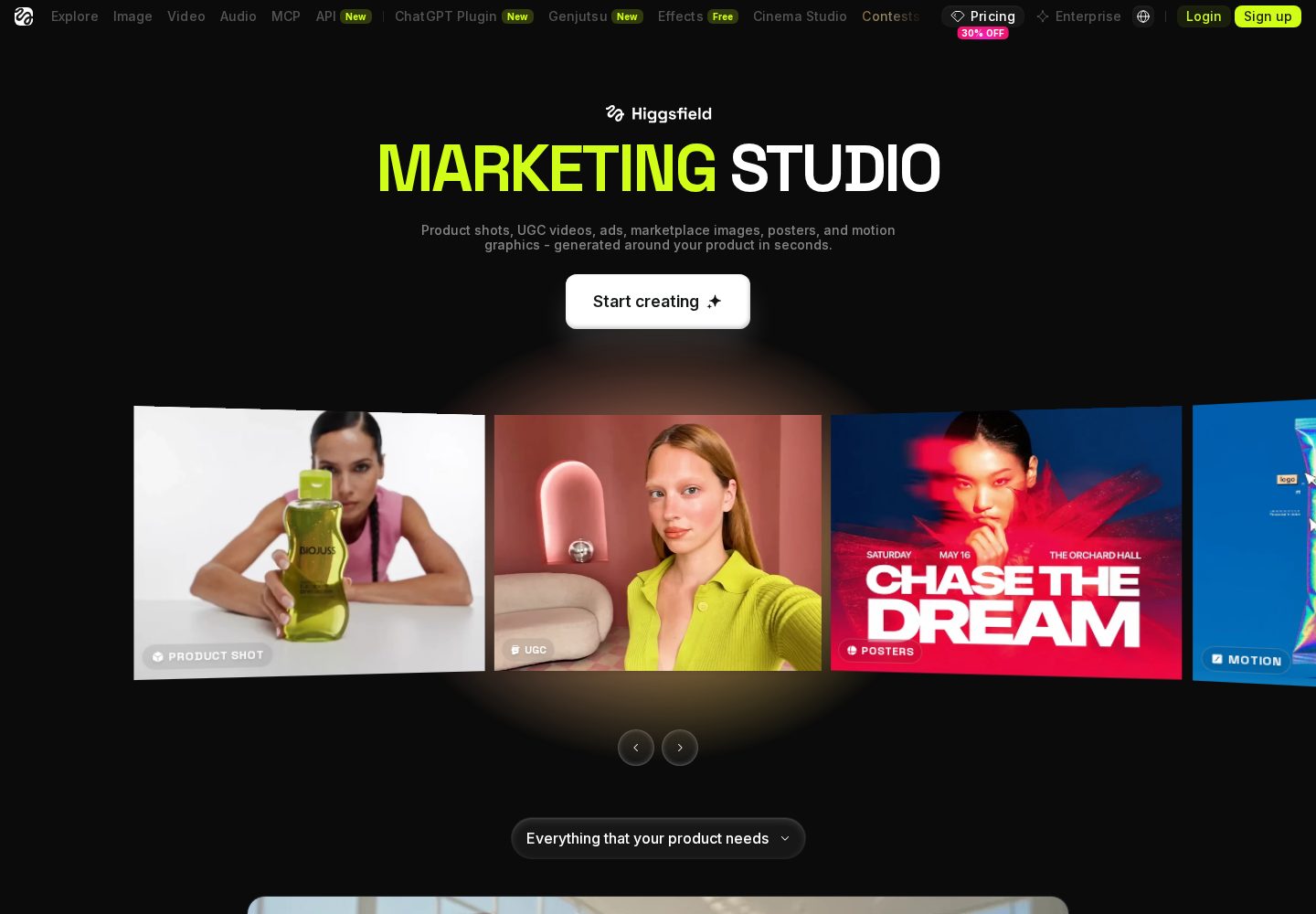
Higgsfield marketing use cases
Marketing Studio examples focus on product shots, motion creative, user-generated-style ads, and social campaigns.
View official source: Higgsfield Marketing Studio overview
Lovable AI app builder
Lovable turns a written product brief into a working web application with editable code and integrations.
View official source: Lovable product page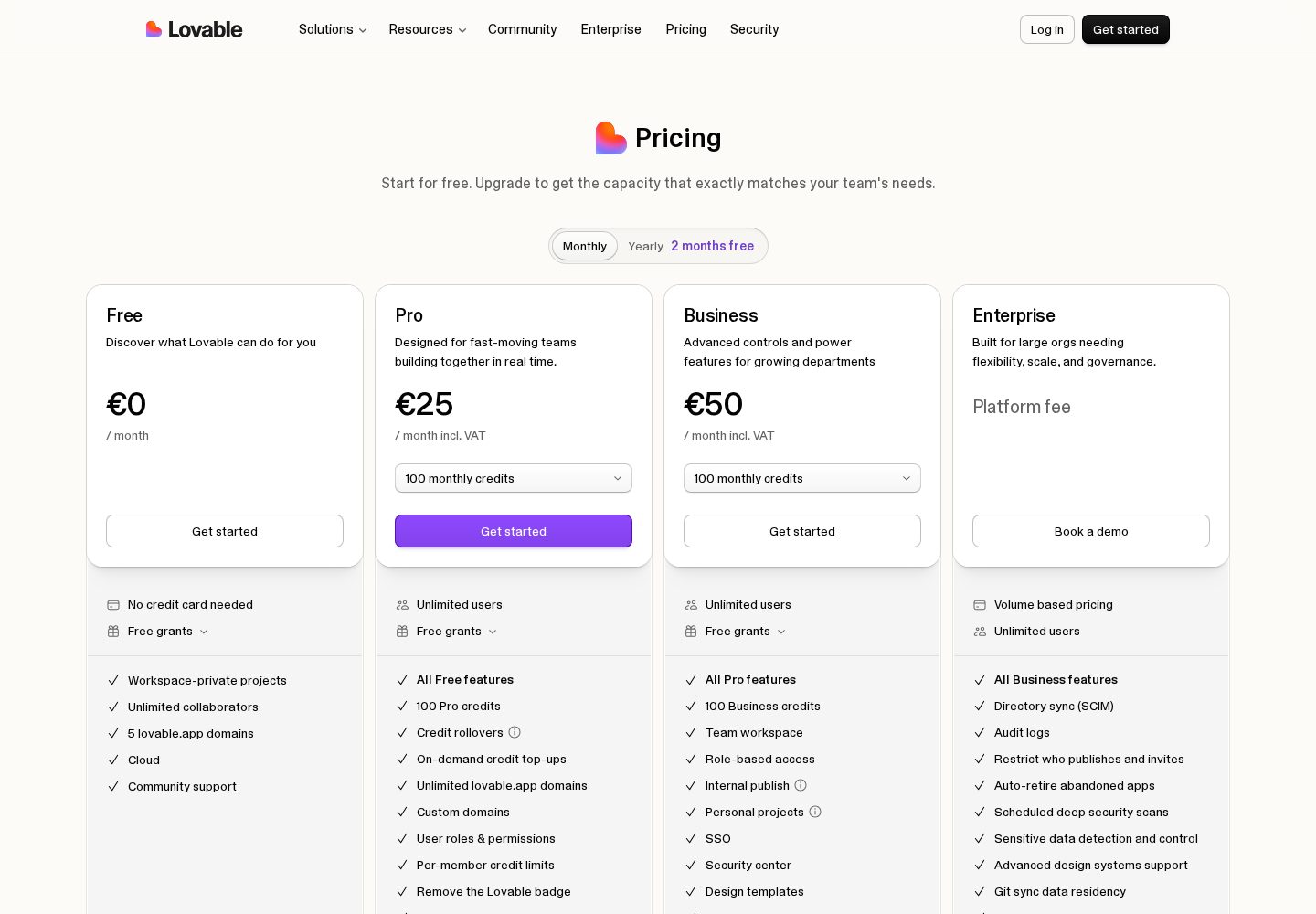
Lovable pricing plans
Lovable's official plan comparison shows its credit allowances and features for individuals and teams.
View official source: Lovable pricing page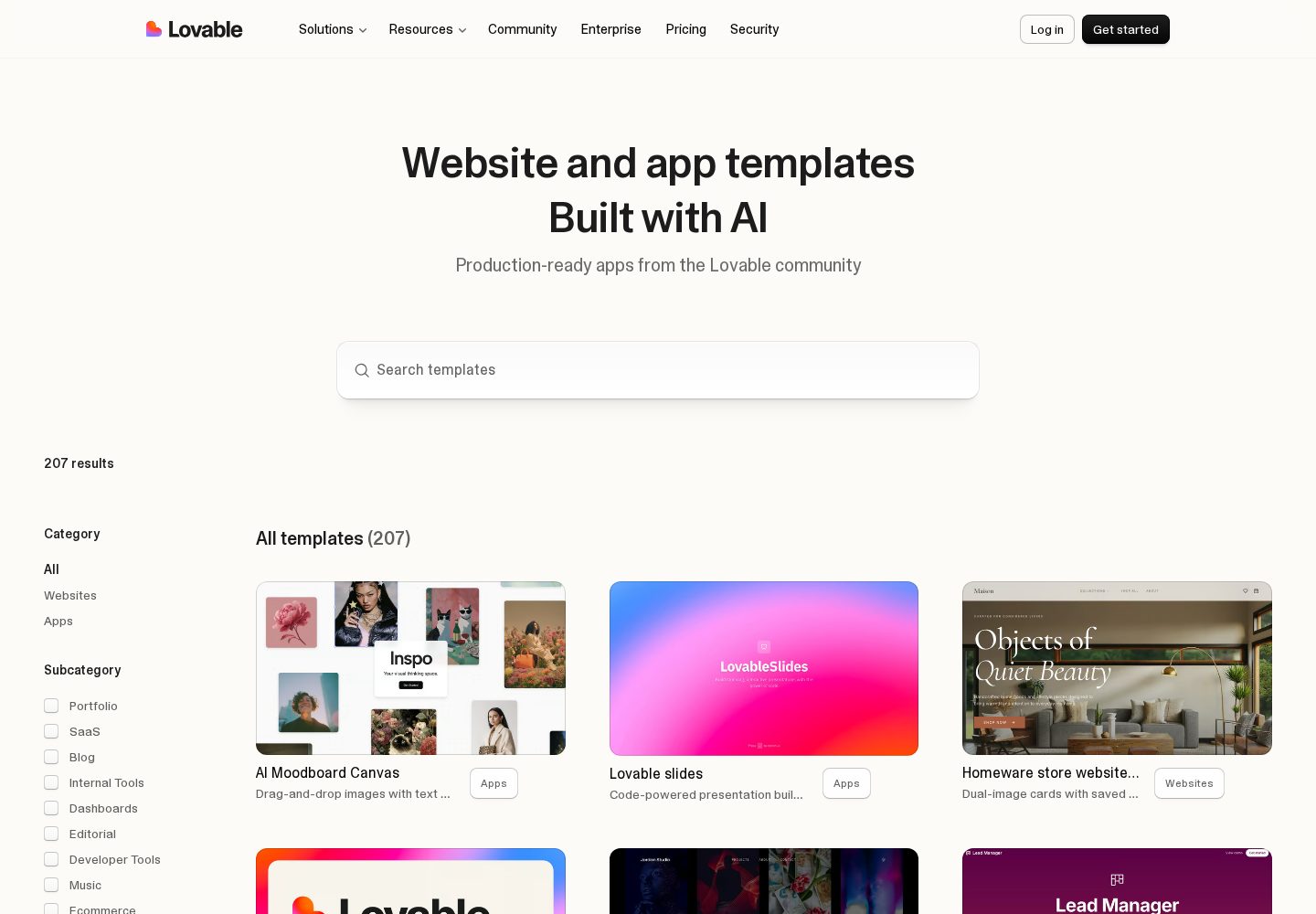
Lovable templates and examples
The template library demonstrates the range of public websites and app interfaces produced with Lovable.
View official source: Lovable templates libraryHiggsfield or Lovable? The short answer
These two tools are not substitutes. Higgsfield is an AI video and image generator for creators and marketers — it makes cinematic clips, ads and product visuals, and it does not build software. Lovable is an AI app builder that turns a written brief into a working full-stack web app with a database, accounts and hosting. If you need a website or product, use Lovable at $25 per month for Pro. If you need content to promote it, use Higgsfield from $19 per month for 270 credits. Many teams pay for both, and that is usually the correct answer rather than a compromise.
Key takeaways
- Higgsfield produces media; Lovable produces software. Choose by output, not by feature list.
- Lovable scores 9.8 as an app builder; Higgsfield scores 9.5 in our list for multimedia output, not for app building.
- Higgsfield pricing: free with limited credits, Starter $19/month (270 credits), Plus $47/month (1,200), Ultra $99/month (3,000), plus team plans.
- Lovable pricing: free plan with limited credits, Pro $25/month, Business $50/month, custom Enterprise.
- The common workflow is Lovable for the product or landing page and Higgsfield for the ads and social clips that drive traffic to it.
Higgsfield vs Lovable: why this comparison exists
People search for this comparison because both tools get described as 'AI builders' and both show up in the same conversations about launching something quickly. The words overlap; the products do not.
Lovable takes a written description and produces software: pages, a database, user accounts, hosting, a real URL. When you are done, you have an application that other people can use and that you can keep changing.
Higgsfield takes a written description and produces media: video clips and images, generated through multiple underlying models, aimed at advertising and social content. When you are done, you have files. Excellent files, often, but files — not a running product.
We include Higgsfield in our top five because it is genuinely outstanding at what it does and because a large share of people launching something need both capabilities in the same week. We do not pretend it builds apps, and any page that implies otherwise is misleading you.
What each one actually produces
Our Lovable build ended with a working subscription product front end: a landing page, a signup flow, a logged-in dashboard, data persisting between sessions, and a live address we could hand to someone. Roughly an afternoon of prompting, no code written by hand.
Our Higgsfield run ended with a set of short cinematic clips and a batch of product stills suitable for paid social. The generation quality was the strongest part of the experience — camera movement and lighting looked deliberate rather than accidental, which is where many video generators fall down.
Neither output substitutes for the other. You cannot put a video file on the internet and call it a product, and you cannot ask an app builder for a fifteen-second cinematic ad. The reason to read this page is to confirm which of those two things you actually need right now.
- Lovable output: a live web application with database, authentication and hosting.
- Higgsfield output: video clips and images for ads, social posts and product pages.
- Overlap: none in function; complete overlap in who needs them — anyone launching a product.
Side by side
| Criterion | Higgsfield | Lovable |
|---|---|---|
| Ease of use | Beginner-friendly | Chat-based; no coding required to start |
| AI capabilities | Multi-model AI platform for generating cinematic video and images from a prompt. | Prompt-driven builder that turns a written description into a working full-stack web app. |
| App types | AI video, AI images | Web apps, SaaS, Prototypes |
| Customisation | One subscription unlocks many leading video and image models instead of separate accounts | Describe the app in plain English and get a working front end and back end |
| Integrations | Kling, Seedance, Veo, FLUX, Nano Banana and other models under one roof, Cinema Studio and Marketing Studio, MCP, CLI and Canvas workflows, Credit Packs and Auto-Refill top-ups | GitHub, Supabase, Stripe, Built-in Cloud backend |
| Pricing | Free plan with limited credits; Starter $19/month (270 credits); Plus $47/month (1,200 credits); Ultra $99/month (3,000 credits); Team plans available | Free plan with limited daily credits; Pro from $25/month, Business $50/month |
| Free plan | Yes | Yes |
| Code / export | No | Yes |
| Best use cases | Content creators, marketers and filmmakers who want professional-looking AI video and images from prompts without managing several model subscriptions. | Founders, product managers and designers who can describe what they want clearly and need a real, hosted product rather than a prototype — especially anyone building a SaaS MVP or internal tool solo. |
Category winners
We evaluated both in September 2026 against the job each is actually sold for, rather than forcing an artificial head-to-head. For Lovable we built a subscription product landing page with signup and a dashboard. For Higgsfield we produced a set of short promotional clips and product images for that same fictional product. Pricing and credit allowances come from each vendor's published pricing page checked that month. We are explicit throughout that Higgsfield is not an app builder and we do not score it as one.
| Category | Winner | Why |
|---|---|---|
| Building a web app or SaaS | Lovable | Higgsfield does not build software at all. |
| Cinematic video generation | Higgsfield | Multi-model video engine is the entire product. |
| Product and ad imagery | Higgsfield | Purpose-built for marketing visuals. |
| Database, accounts and hosting | Lovable | Included in every Lovable app. |
| Entry price | Higgsfield | $19/month Starter versus $25/month Pro — but for different jobs. |
| Free tier for evaluation | Tie | Both offer limited free usage. |
| Marketing a product you built | Higgsfield | Ads, clips and visuals at volume. |
| Owning the underlying code | Lovable | Only relevant to Lovable; Higgsfield outputs media files. |
Higgsfield pros & cons
Pros
- One subscription unlocks many leading video and image models instead of separate accounts
- Cinematic camera controls produce genuinely film-like motion from a text prompt
- Free plan lets you test the workflow before paying
- Web, Canvas, CLI and MCP workflows fit both casual creators and production pipelines
Cons
- Not an app builder — it generates video and images, not applications
- Credits do not roll over and premium video burns through them quickly
Lovable pros & cons
Pros
- Describe the app in plain English and get a working front end and back end
- Built-in database, authentication and hosting — no separate setup
- Two-way GitHub sync, so the code stays yours
- Live preview makes each change visible immediately
- Free plan is generous enough to judge the tool before paying
Cons
- Credit-based usage gets expensive on heavy iteration
- Unusual business logic and security work still need developer review
- Large existing codebases are not its strong point
Pricing compared
Higgsfield publishes a free plan with a limited model selection and a small credit allowance, Starter at $19 per month for 270 credits and core generation models, Plus at $47 per month for 1,200 credits with more models and parallel generations, Ultra at $99 per month for 3,000 credits with full model access including unlimited use of selected models, and team plans.
Lovable publishes a free plan with limited daily and monthly credits and public projects, Pro at $25 per month with a monthly credit allowance, private projects and custom domains, Business at $50 per month and custom Enterprise pricing.
Comparing the two prices directly is close to meaningless, but the combined figure is useful to know: about $44 per month gets you Lovable Pro and Higgsfield Starter, which together cover building a product and producing a first round of marketing content. For most small launches that is a lower total than a single freelancer invoice.
Credits behave differently in each. Higgsfield's credits map to generations, and video costs far more per output than images, so 270 credits stretches much further for stills than for clips. Lovable's credits map to AI work on your app, so heavy iteration in week one consumes more than a quiet month once the product is stable.
Using both together
The sequence that works is straightforward. Build the product or landing page in Lovable first, because the content you need depends on what the product actually turns out to be. Then generate the launch assets in Higgsfield against the real thing rather than against a plan.
Keep the visual language consistent between the two. Feed the same colours, tone and product description into your Higgsfield prompts that the site uses, so the ad and the landing page look like they came from the same company. This is the step most people skip, and it is why a lot of AI-assisted launches feel disjointed.
Start both on free tiers. Lovable's free plan is enough to know whether the product idea holds together; Higgsfield's free allowance is enough to see whether the visual style suits your brand. Upgrade whichever one you hit the wall on first, which is usually Lovable during the build week and Higgsfield during the launch week.
Limitations worth knowing
Higgsfield is credit-metered and video is expensive in credits. If your plan involves producing a steady stream of clips, model the monthly cost at your intended volume before committing — the Starter tier's 270 credits is an evaluation budget rather than a production one for video-heavy work.
Generated video also still needs a human eye. Hands, text rendered inside a scene and continuity across shots remain the categories where AI video most often produces something you cannot ship, and you should budget regeneration attempts rather than assuming one pass per clip.
On Lovable's side, the standard caveats apply: it will build what you ask without warning you about permissive data access, and heavy prompting on a mature app can regress working features. Connect GitHub early, test as each type of user, and change one thing at a time.
Which One Should You Choose?
If what you are making is content — ads, clips, product visuals — Higgsfield's multi-model video engine is the right tool. If what you are making is software, Lovable is the right tool. They solve different problems; pick by output, not by features.
Choose Higgsfield if
- You need video, ads or product imagery, not software.
- You are producing social or paid campaign content at volume.
- Cinematic quality matters more than editing control.
- You already have a website and need assets to promote it.
- $19/month for 270 credits fits an image-led content plan.
Choose Lovable if
- You need a working website, web app or SaaS product.
- The app needs a database, user accounts and hosting.
- You want a custom domain and private projects.
- You will keep changing the product over time.
- You want access to the underlying code as the project grows.
Higgsfield vs Lovable: FAQs
Can Higgsfield build a website or app?
No. Higgsfield is an AI video and image generation platform. It produces media files for ads, social content and product visuals. To build a website or web app from a written brief, use an app builder such as Lovable.
Why is Higgsfield in a list of AI app builders?
Because it is outstanding at what it does and most people launching a product need both an app and the content to market it. We rank it for multimedia output and state clearly on every page that it does not build software.
How much does it cost to use both Lovable and Higgsfield?
About $44 per month for Lovable Pro at $25 and Higgsfield Starter at $19. Both also have free tiers, so you can evaluate the combination before paying for either.
How far do Higgsfield's credits go?
It depends heavily on output type — video generation consumes far more credits per result than image generation. Starter gives 270 credits a month, Plus 1,200 and Ultra 3,000, so model your expected mix of video and stills before choosing a tier.
Which should I buy first?
Lovable, in almost every case. Build the product or landing page first, then generate marketing content against the real thing rather than against a plan — the assets will be more accurate and you will waste fewer credits.
Continue exploring
Related AppRank guides
Read the full reviews
Related comparisons
Relevant buying guides
Not Sure Which AI App Builder to Choose?
Get our free AI App Builder comparison guide.
No sign-up is required to read any comparison on this site.